Bridging the Generational Divide Through L&D
A How-To Guide
Sarah Curtis, OD Solutions Specialist, C2C Organizational Development
Apr 20, 2026
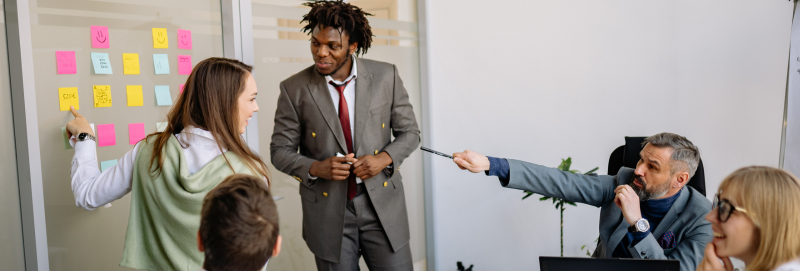
Sitting at my nook in our brightly lit cheerful office last week, the room felt like a living timeline of workplace history.
On one end, we had a Senior director who remembers when "high-tech" meant a fax machine. On the other, a Gen Z intern who was subtly editing an Instagram reel for our brand while another was simultaneously taking perfect meeting notes. In the middle? The rest of us, trying to figure out if a "thumbs up" emoji is a friendly "got it" or a passive-aggressive "fine, whatever."
For Learning and Development (L&D) specialists, this isn't just a logistical challenge but it’s a cognitive and cultural goldmine. When we stop viewing age gaps as "clashes" and start seeing them as a spectrum of expertise, we can then design learning ecosystems that don't just bridge the gap but close it entirely.
1. Moving Beyond the Stereotypes
The first step in a solid L&D strategy is officially retiring the "lazy Gen Zer" and "tech-challenged Boomer" myths. Research consistently shows that across all ages, employees want the same core things: growth, recognition, and psychological safety.
As L&D pros, we should consider a shift from "age-based training" to "preference-based learning." Think of it like offering a buffet of options where everyone can pick what actually works for them:
- Micro-learning: for the fast-paced, mobile-first Gen Zer.
- In-depth workshops: Structured, deep-dive sessions for the Gen Xers who value expertise and a clear framework.
- Social learning: Collaborative setups for Millennials who thrive on feedback and working together.
Insight: Don't force one on the other. Just provide options and stay out of the way.
2. The Office User Manual
One of the most common things L&D does is facilitate a "How to Work with Me" session. It sounds cheesy, but honestly, it’s a lifesaver.
On one hand I’ve seen a 55-year-old colleague realize that their 5-minute voice notes were giving their junior staff heart palpitations because it made a simple task look "too grave and serious." And on the other hand, I’ve seen Gen Zer’s realize that Team pings at 9:00 PM feel like a boundary violation to a Gen Xer, even if they just meant it "for tomorrow!".
Insight: When we teach people to talk about their preferences, the friction disappears.
3. The Power of Reverse Mentorship
Traditional mentorship is a one-way street where the senior leader pours wisdom into their junior associate. But in a mixed generational workforce, knowledge is circular.
Reverse Mentorship flips the script. What this looks like is a Gen Z "digital native" mentoring a Senior Leader on the nuances of AI prompting or social media trends. Meanwhile, that executive is giving the Gen Zer the "helicopter view from 30,000 feet", sharing those hard-earned lessons on stakeholder management, strategy, and staying resilient when things get hard.
Insight: When you democratize expertise, you break down siloed thinking and build a level of mutual respect that transcends tenure.
4. Designing for Cognitive Diversity
Different generations often have different "default settings" for how they process information.
- The "Why" vs. The "How": Younger generations often need to understand the purpose (the "why") before they commit to the process. Older generations may prioritize the methodology (the "how") to ensure stability and accuracy.
- Feedback Loops: Gen Z and Millennials often crave real-time feedback, viewing it as a GPS for their career. Gen X and Boomers might be more accustomed to the annual or quarterly review.
Insight: Consider "Just-in-Time" learning, platforms that allow for quick knowledge checks and instant peer feedback, ensuring no one is left waiting for a performance cycle to improve.
5. Competitive Advantage
Ultimately, a multigenerational workforce is a competitive advantage.
- Boomers/Gen X provide the – knowing why things were done a certain way to avoid repeating past mistakes.
- Millennials/Gen Z provide the – identifying emerging trends and challenging the status quo.
Insight: We aren't trying to make everyone act the same. We are trying to make everyone valuable to one another.
Conclusion
Working with four or five generations isn't a problem to be solved but a culture to be curated. As L&D specialists, we are the architects of this culture. By moving away from "one-size-fits-all" training and leaning into flexibility, curiosity, and preference-based learning, we turn generational friction into organizational success.
The future of work isn't young or old, it’s integrated.
Sarah Curtis is a Organizational Development Solutions Specialist who is passionate about creating meaningful human connections. She loves to engage with people at a deeper level to help making a positive impact on their lives, through her coaching and facilitation work. Her areas of expertise include Interpersonal Effectiveness, Cross-Cultural Awareness, Building High Impact Teams and Strategic Thinking.
References:
*References*
